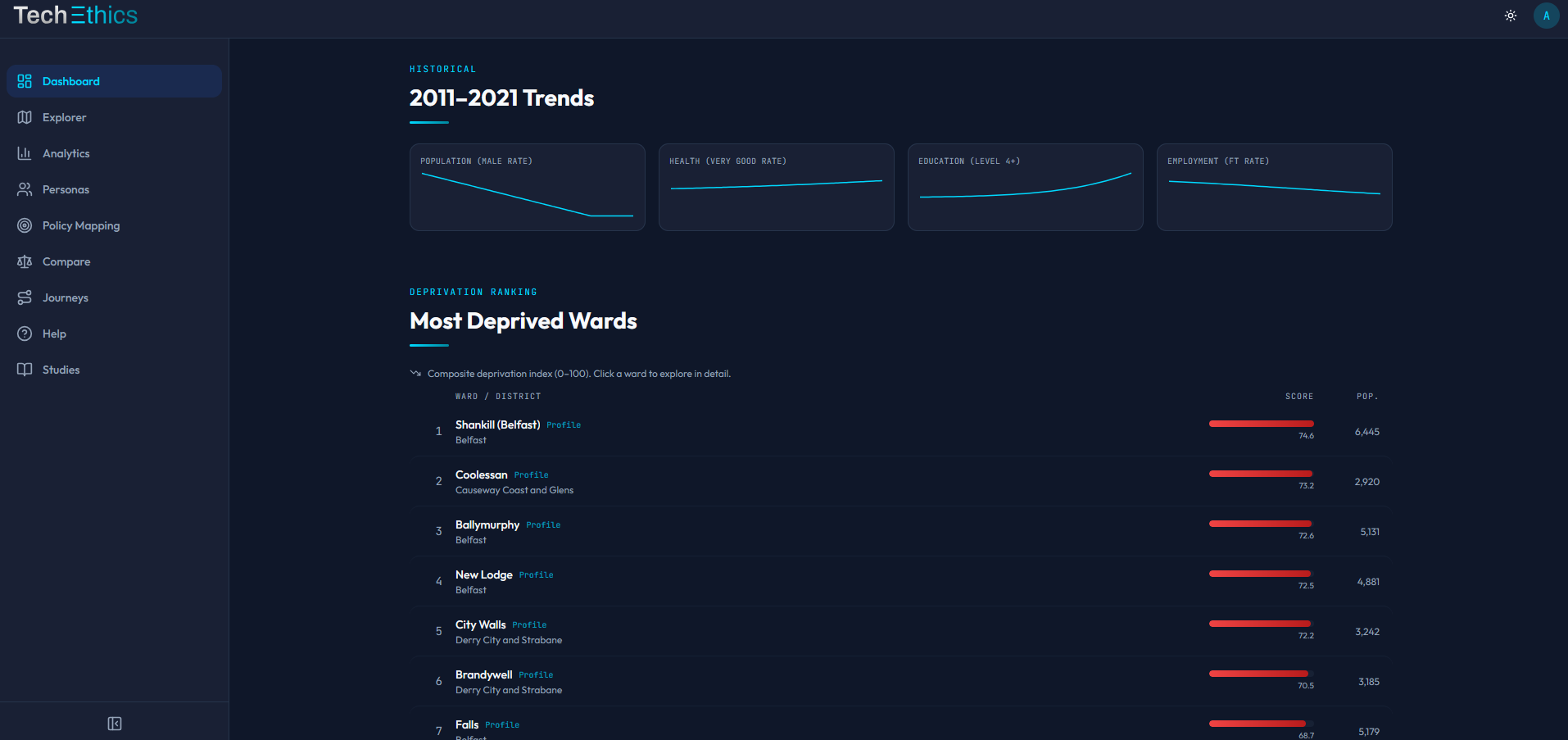
Dashboard Trends
Population trends and deprivation rankings across time periods.

Longitudinal Data Analytics Platform
Aggregate, harmonise, and analyse decades of siloed data across geographies and time periods. From census records to organisational datasets, Atlas transforms fragmented data into actionable intelligence with ML-driven community profiling, policy simulation, and trend analysis.
Decades of valuable data sit trapped in incompatible formats, inconsistent boundaries, and disconnected silos — making longitudinal analysis nearly impossible for organisations and governments that need it most.
Critical datasets spanning decades are scattered across systems with incompatible formats, making cross-period analysis manual and error-prone.
Administrative and geographic boundaries shift over time, breaking continuity and making like-for-like comparison across periods unreliable.
Analysts resort to spreadsheets and ad-hoc scripts, with no unified platform for harmonisation, trend analysis, and evidence-based decision making.
Explore Atlas's comprehensive suite of longitudinal data analytics and visualisation tools.
Population trends and deprivation rankings across time periods.
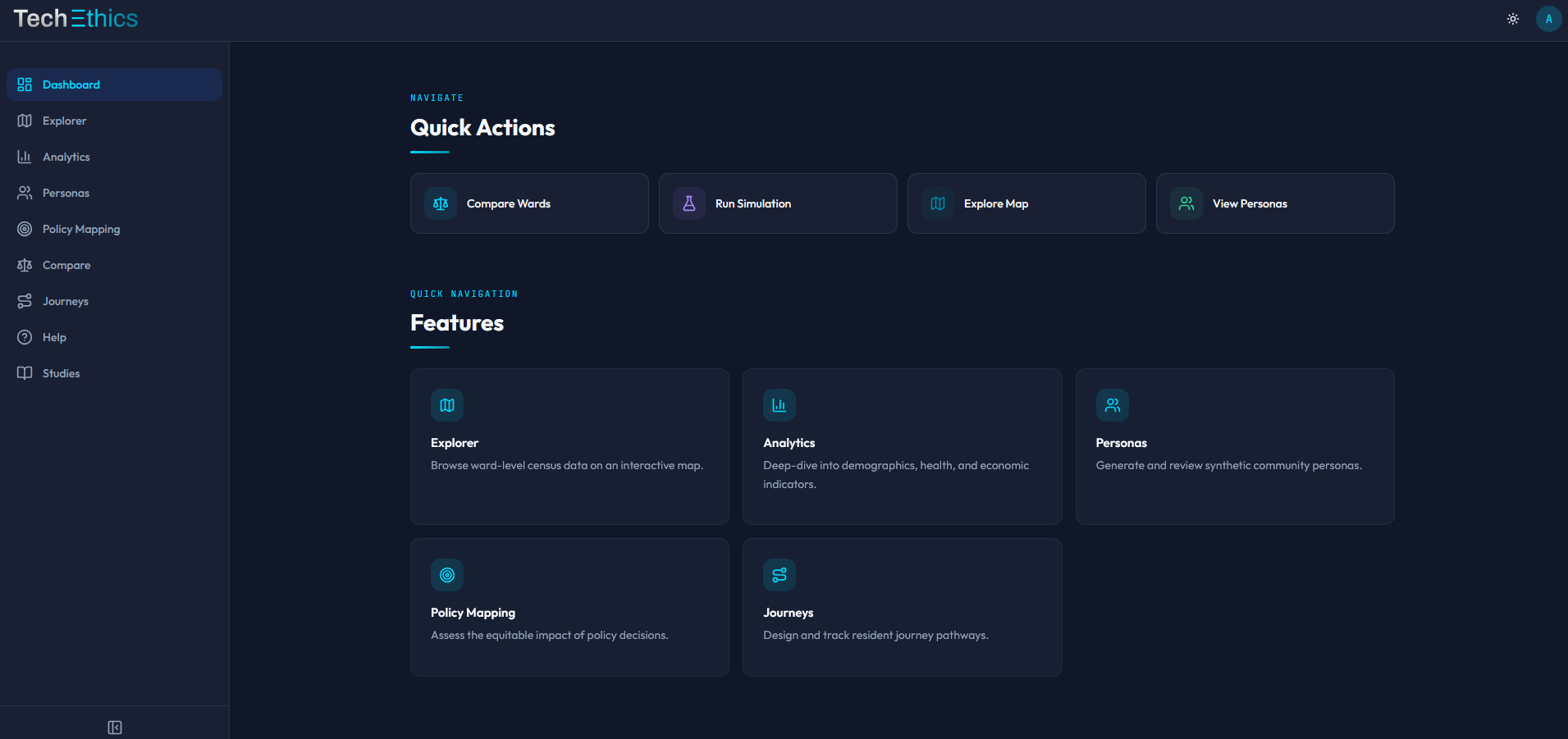
Central hub with quick access to all platform capabilities.
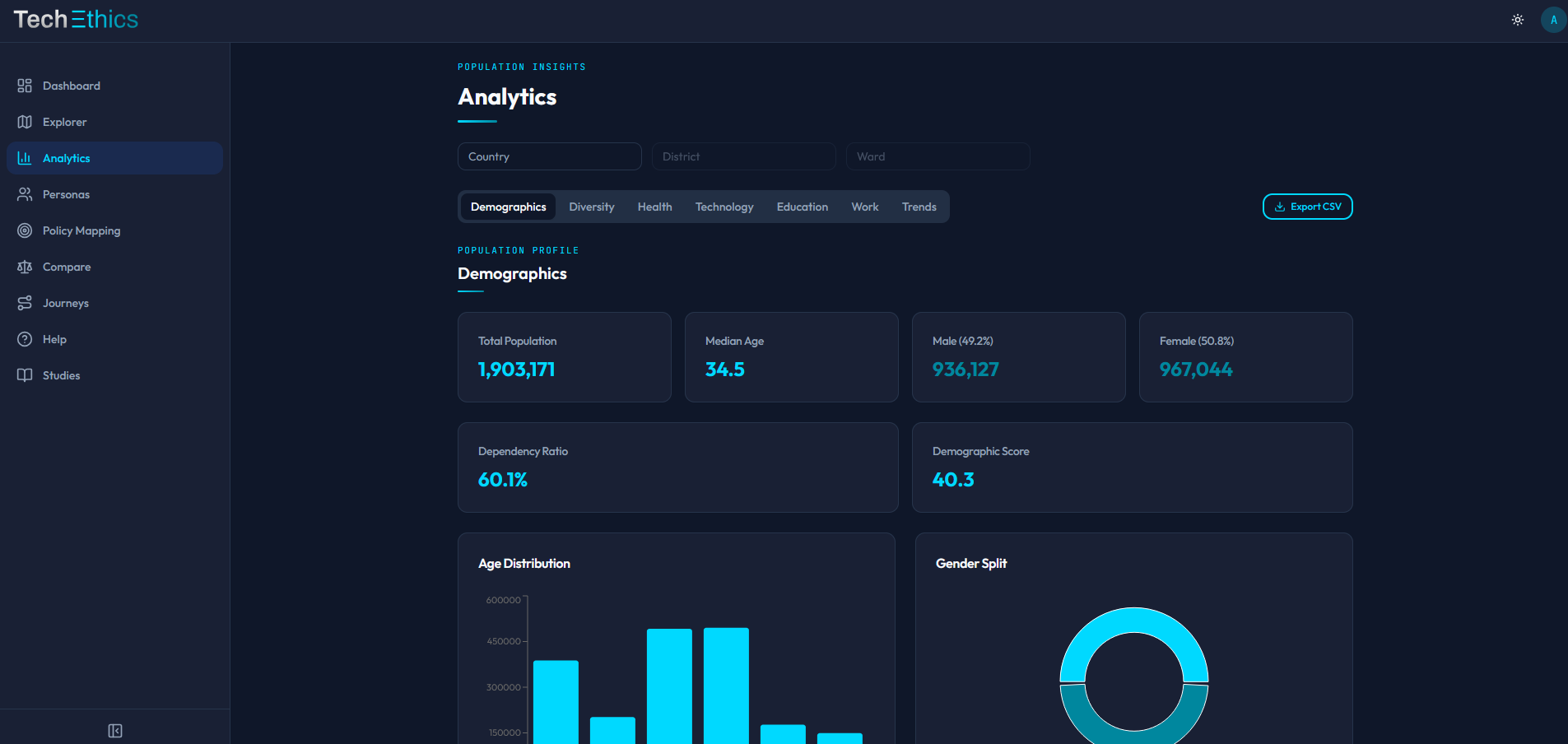
Demographics, health, education, work, and technology analysis with export.
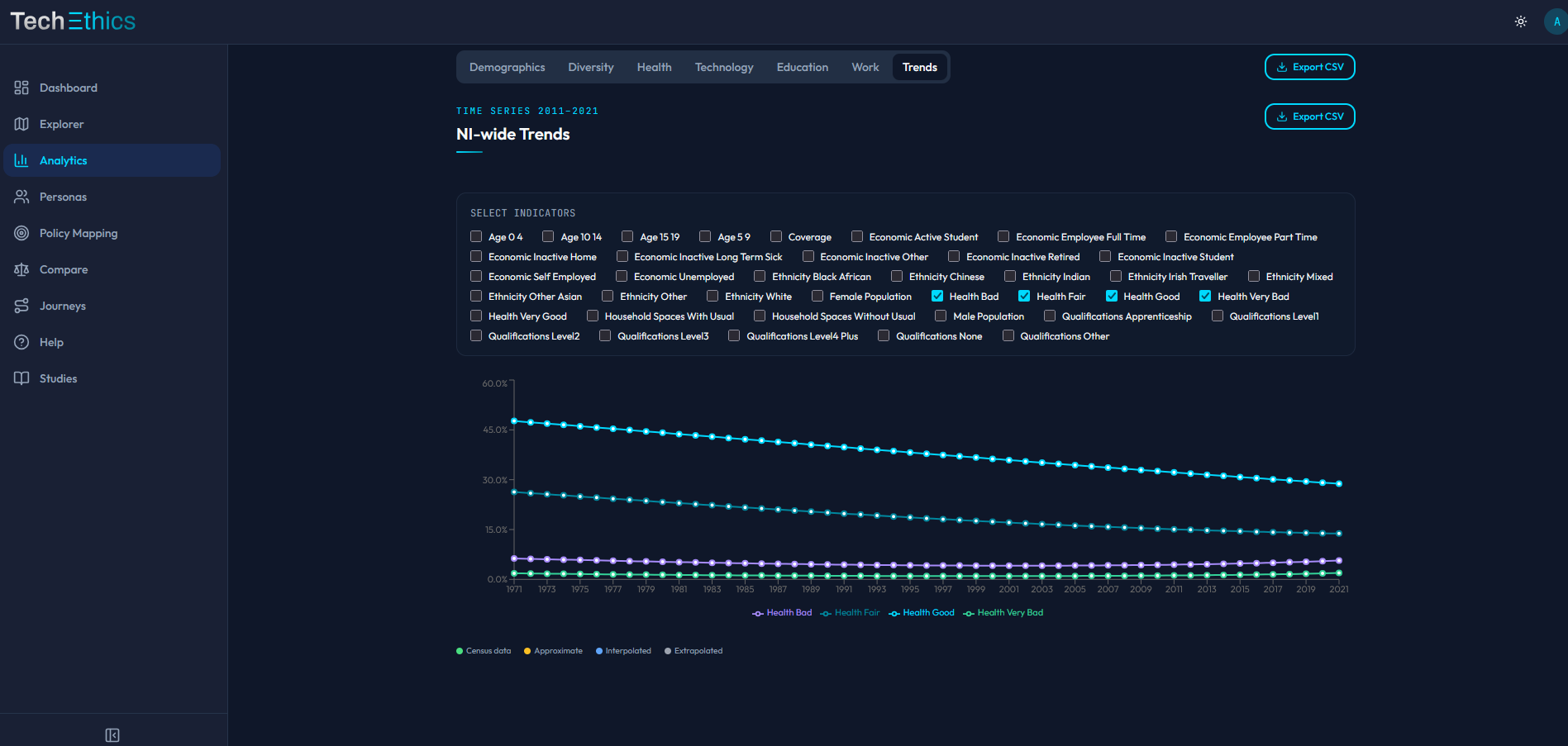
NI-wide longitudinal trends across 50+ indicators from 1971–2021.
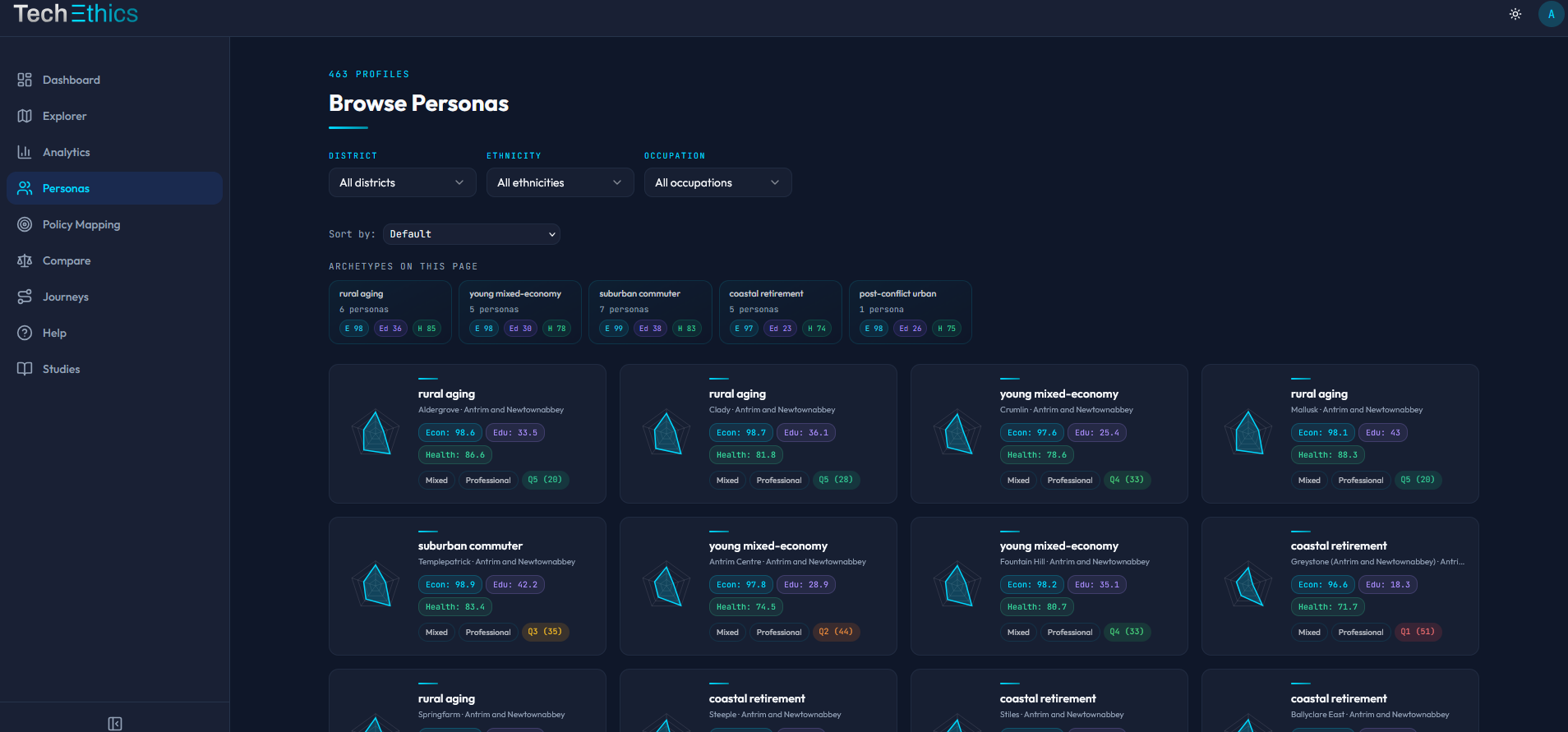
ML-driven community archetypes with distribution and characteristics.
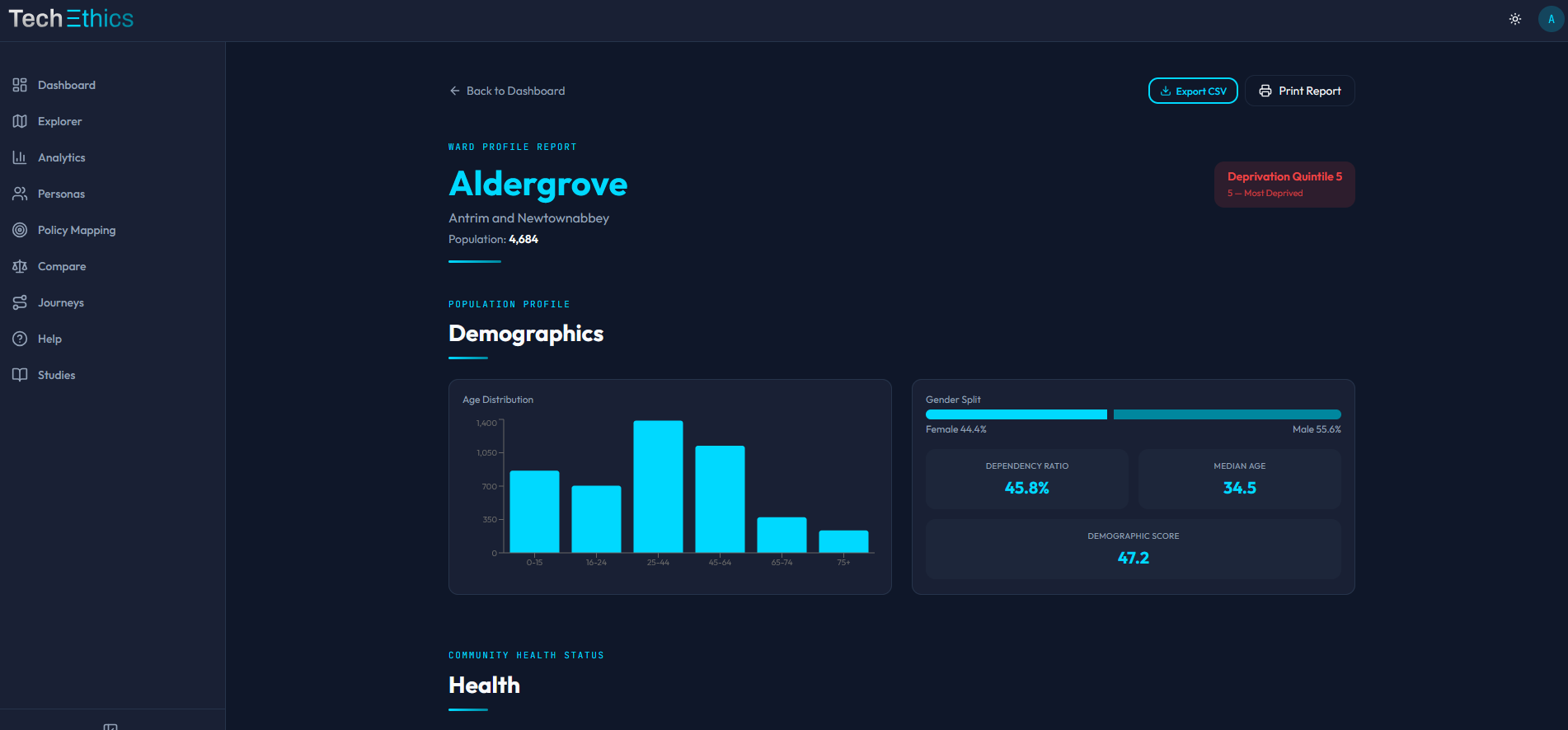
Comprehensive ward-level report with demographics, health, and more.
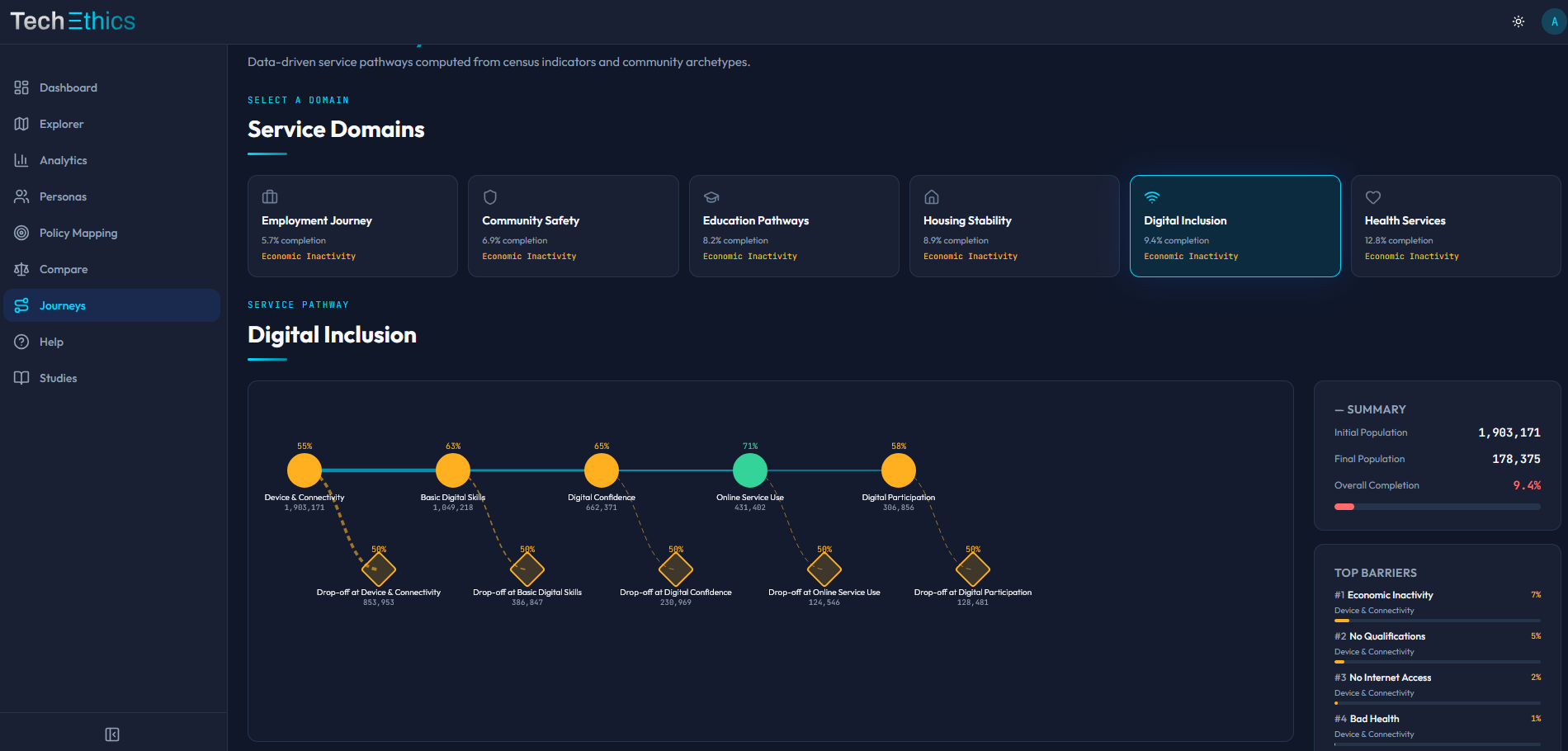
Data-driven service pathways across six domains with funnel analysis.
Atlas provides a comprehensive suite of tools for longitudinal data analysis and evidence-based decision making.
Choropleth maps with drill-down from country to district to ward level across 40+ variables.
Six analytical domains plus composite deprivation index with demographic and trend analysis.
ML-based latent class analysis to identify community archetypes with data-driven naming.
What-if modelling to assess policy interventions with 5-year projections.
Stage-by-stage modelling across health, education, employment, housing, and more.
Evidence-based planning using longitudinal ward-level data and deprivation analysis.
Simulate interventions and assess impact across demographics and geographies.
Access harmonised longitudinal datasets spanning decades for academic study.
Understand community needs through archetype profiling and service journey analysis.
Track health indicators over time and identify areas of greatest need.
Analyse employment, education, and economic trends to target investment.
Register your interest to receive updates on Atlas development and be among the first to access the platform when it launches.
Priority access when the platform launches
Shape the platform with your feedback
Be the first to hear about new features